
At Ocado Logistics, innovationand sustainability go hand in hand. As we continue to decarbonise our operations, we’re focused on deploying solutions that work in the real world today, while keeping us on track for our long-term net zero ambitions.
As part of our alignment with Ocado Group’s decarbonisation commitments, we have net zero targets for our operations by 2035 and for our value chain by 2040. Alongside this, we have interim targets to reduce our emissions intensity by 40% by 2030. Hitting these goals means taking action across energy, sites, and fleet whilst learning fast through trials that can scale.
On electricity, all our UK Customer Fulfilment Centres(CFCs) already run on 100% renewable electricity. This is a fundamental enabler for reducing our emissions and for electrifying more of our operations overtime, including vehicle charging where appropriate.
On transport, we’re taking a pragmatic, multi-technology approach. We now operate electric last-mile delivery vans from two of our London spokes, helping to cut tail pipe emissions on urban routes. Across the wider fleet, all our vans meet the Euro 6 standard and every van procured since January 2021 has been Euro 6d, the most stringent standard for new diesel and petrol light commercial vehicles.
We’re also exploring what comes next. This year, we’re taking part in the UK government’s hydrogen van trial, which will help test how hydrogen can perform in operational settings and where it could complement electrification in the future.
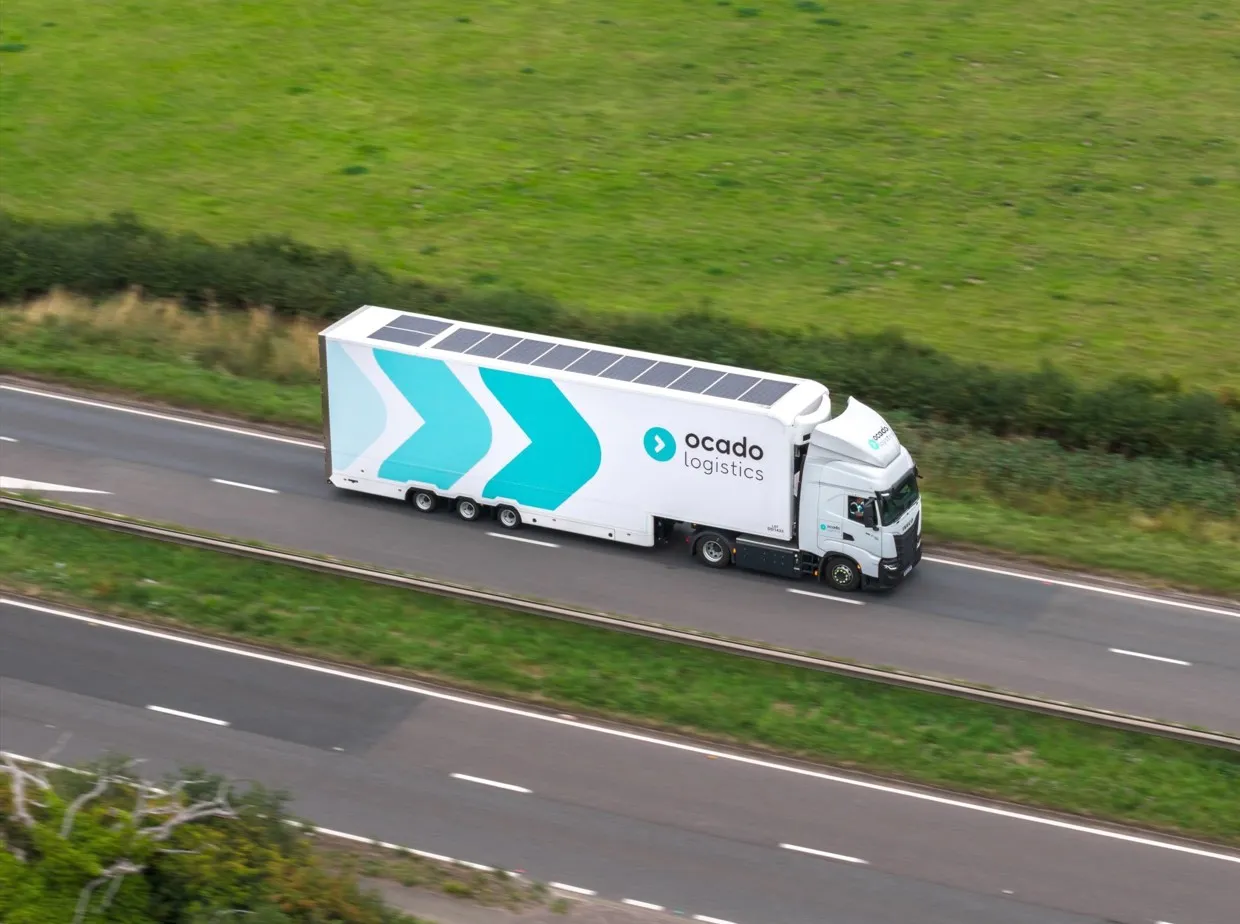
Refrigeration is another important part of the footprint in grocery logistics. Over the last year we’ve been rolling out Sunswap Endurance, an electric, battery and solar-assisted transport refrigeration system, across a portion of our double-deck trailer fleet. The pilot has delivered strong operational learnings and environmental benefits, and it’s helping us evaluate where electrified refrigeration can play the biggest role as the technology and infrastructure continue to evolve.
Reducing waste is equally important. Any inedible, unsold food that is classified as waste is sent to anaerobic digestion, where it is used to generate energy, supporting a more circular approach and avoiding higher-impact disposal routes.
Decarbonising logistics isn’t about a single silver bullet. It’s about combining proven actions with well-designed trials, partnering with innovators, and scaling what works. We’ll continue to invest in and test solutions that help build a more sustainable, resilient logistics network for our customers, partners and the communities we serve.

.webp)
.webp)
